

What does it mean to be a woman in science? If you are one of them, it means you are smart, tenacious, extremely hardworking, and almost assuredly, an excellent multi-tasker. And if you’re in research, it means that you are one of the very few in the world, as only 33% of researchers are women and they are often underrepresented in the field.
Despite these odds, some women are determined to make their mark as early career researchers and imagine a future without cancer. On International Women’s Day, get to know 2022 Cure Cancer researchers Sandra Brosda, Marlene Hao, Marjan Mojtabavi Naeini and Kate Vandyke. Find out what it’s like to be a female researcher in a male-dominated space, what they do to achieve work-life balance, and what they hope for the future for women and girls in science.
SANDRA BROSDA
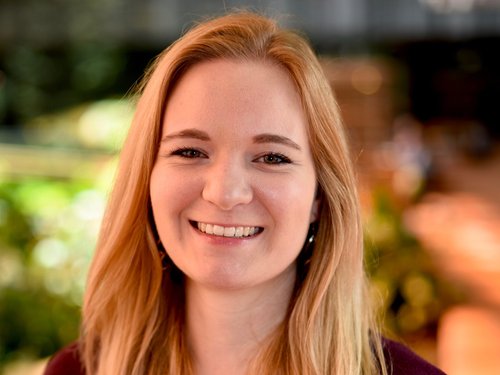
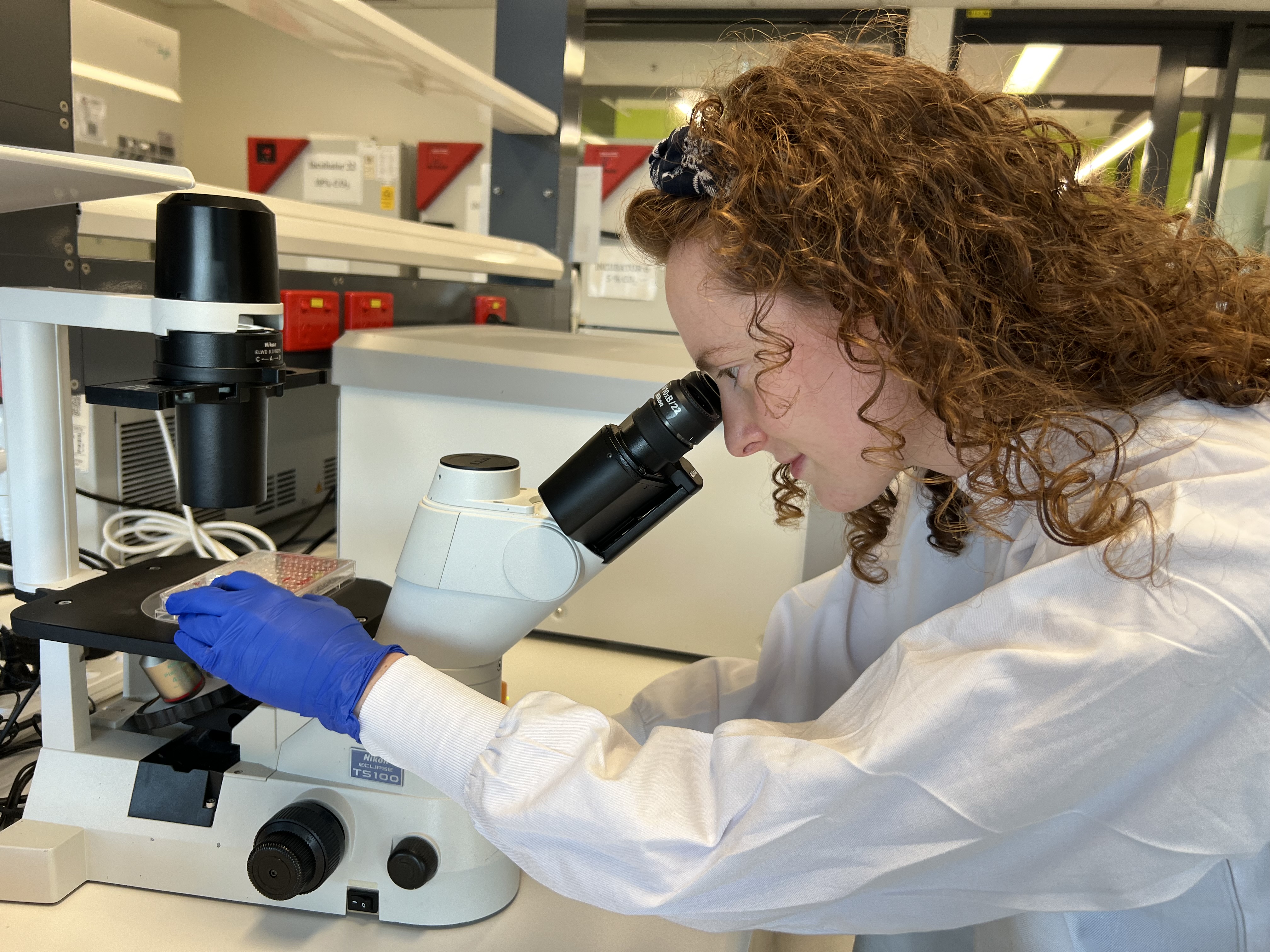
Sandra’s oesophageal adenocarcinoma cancer research is aimed at improving precision treatment. As an early career researcher, she feels fortunate that the gender gap is not affecting her heavily yet. But even though in recent years we have seen an increase of women taking up STEM degrees globally, the male-female ratio changes once again as women progress in their careers. “In the 2021 NHMRC funding round, 59% of applications in the early career category (Emerging Leadership Level 1) had a female lead investigator,” shares Sandra. “However, on the most senior level (Leadership Level 3) only 21% of the applications had a female lead highlighting a big gender imbalance.”
The challenge lies in changing priorities. For a lot of women, they have to choose between having a career or starting a family.
“Combining family and career is still challenging for many women and is most likely one of the reasons for this gender imbalance in science. Research can be very demanding so having a good support network and a way to eliminate stress from life is crucial. I found it very important to have a good work-life balance and a work environment that supports this.”
Playing soccer is one of her favourite ways to decompress. She has been playing soccer since her teenage years in Germany, and now in Australia, the country that made her fall in love with its nature and relaxed lifestyle. She is currently playing for University of Queensland FC and volunteers as their women’s coordinator. “Soccer is a good way for me to improve my mental and physical health. It provides a good balance to my work where I mainly sit in front of a computer and don’t get to move a lot. It was and still is a great way to meet people and make lifelong friends.”
Her advice to other young researchers? “Find yourself a group that supports and encourages you and your ambitions. Don’t be afraid to fail because failure is part of the journey and enables us to grow!”
MARLENE HAO
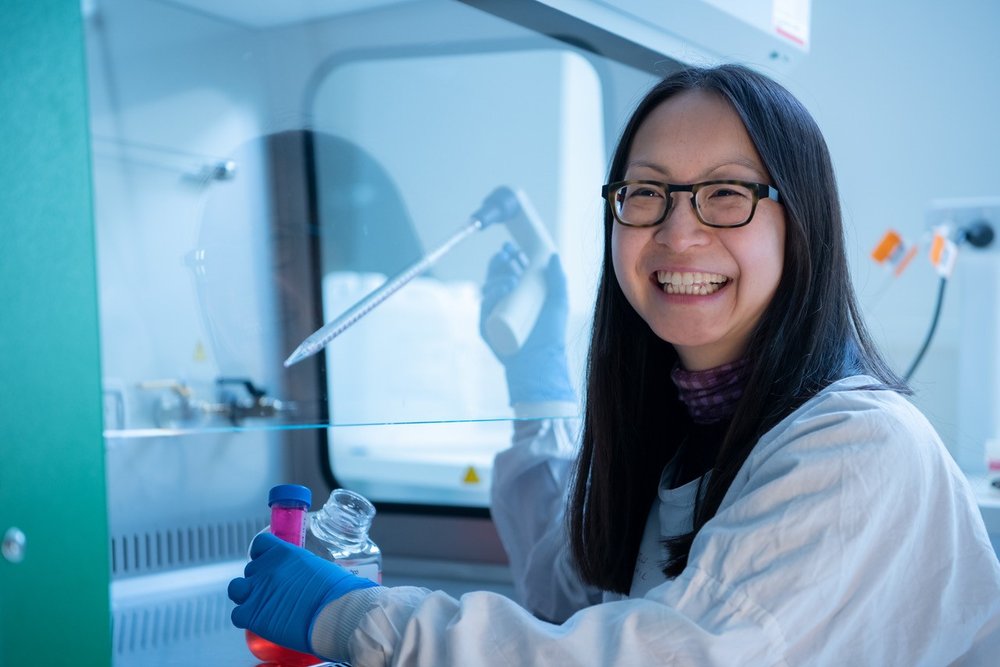
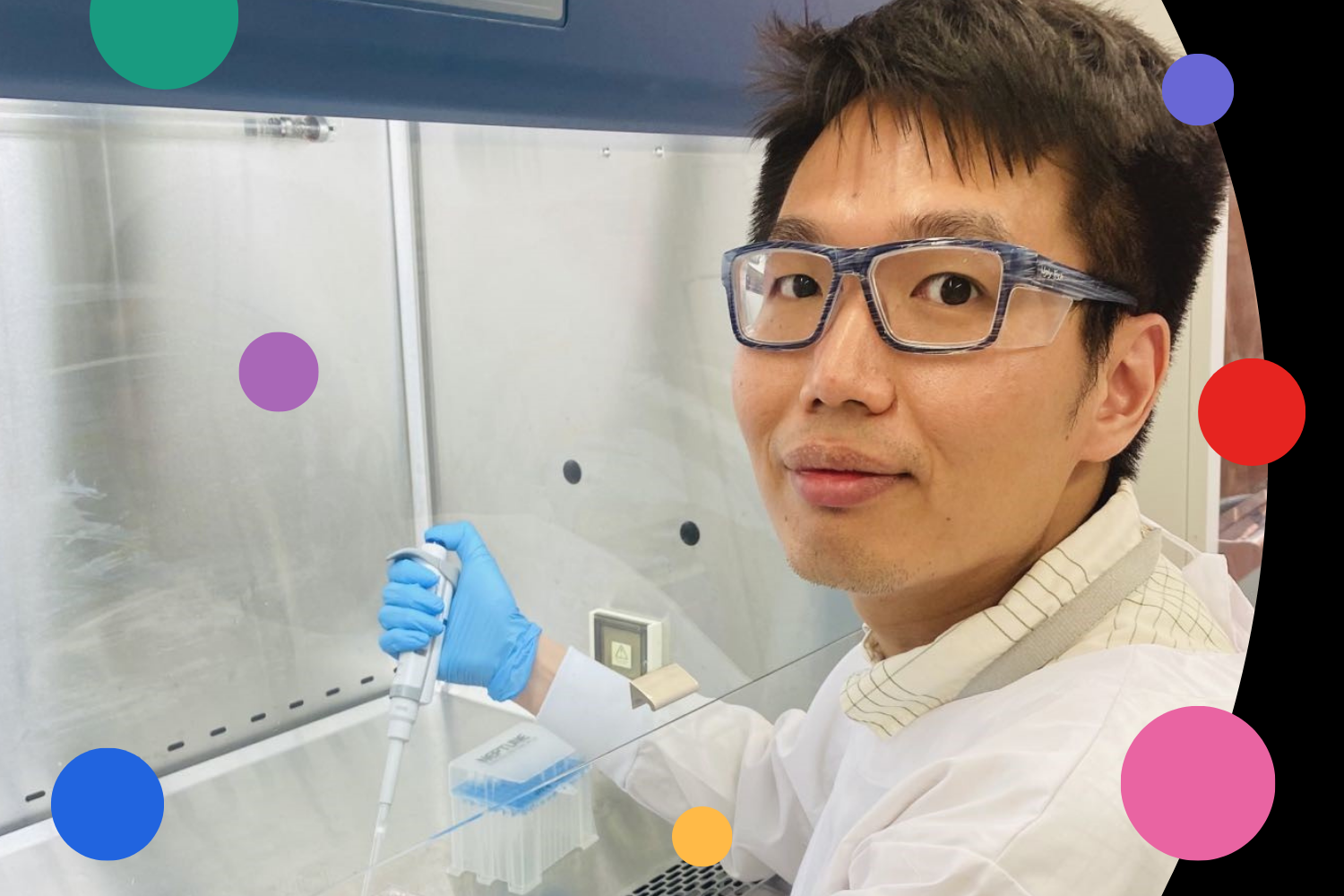
Marlene is a brain cancer researcher who is now in the third year of her grant. As a young mum and researcher, Marlene shares her insights on how the industry could be more helpful to women in the field.
Marlene’s first and second year grant is funded by our principal supporter, the Can Too Foundation. Marlene’s third year grant is funded by the Jennifer Eggins Trust.
“I think trying to juggle family life, particularly young kids, is incredibly difficult for all mid-career researchers, and unfortunately in a lot of cases, still affects females more than males. This is a critical period in a scientist’s career where they’re solidifying their own independent research ideas, however, they’re trying to accomplish 50 hours of work a week while also being present for their family. This takes a huge toll, and means that a lot of scientists decide to leave research and pursue careers with a better work-life balance.”
Funding is also crucial in this regard. “Something that would be a big help is dedicated funding for researchers who have had a career break due to parental leave,” says Marlene. “Ideally, this would be used for both males and female researchers, as it will encourage young fathers to also take time off with their children, and take on more of the childcare time.”
How important is it to see female representation in science? For Marlene, it was pivotal to her work as a researcher. "My PhD supervisor, Heather Young, was a great mentor and role model for my science career. She was incredibly hard-working, determined, successful and also very kind in her approach to science. During seminars and talks, every question that she asked was insightful and showed her interest in the work. But she never used it as a platform for getting across her own point of view. She also always had time for our inane questions! And a lot of what she’s done has really shaped the way that we run the lab now. There’s a lot of times that we ask ourselves ‘What would Heather do?’"
MARJAN MOJTABAVI NAEINI
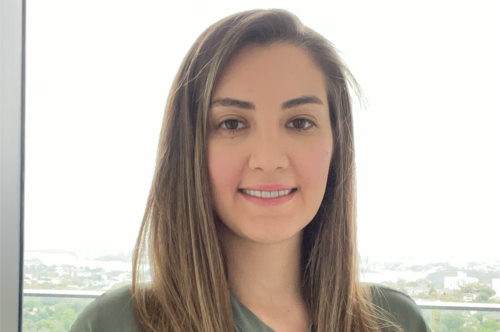
Marjan is a highly skilled bioinformatician who uses newly emerged sequencing technologies in her cancer research. As she and her partner are both early career researchers, she has some thoughts on what women in science need.
“The industry can support female researchers by making fair decisions and providing flexible work arrangements. Moreover, some science leaders have biases toward male researchers which bring female researchers as a second priority for hiring, promotions and leadership. The industry could introduce courses or advertisements to improve the culture of the workplace.”
In her free time, Marjan enjoys travelling to different countries and learning about their culture with her partner. Since this has been impacted by the pandemic, she now spends her time with friends, going to movies, and turning back to an old love - swimming. Marjan used to swim professionally when she was younger. She finds that traits she had as an athlete is something she still applies to her life as a researcher. “Athletes have a strong sense of motivation and optimism. Doing research is challenging and the key to solve the unanswered questions and reach the ultimate goal is motivation and optimism."
KATE VANDYKE

Kate is in her second year of her Cure Cancer grant, researching the dreaded, “incurable blood disease”: multiple myeloma. But as challenging as that may seem, she feels blessed being in research. And she’s already setting a good example for her daughter by sharing her love for science.
“This has been one of the great benefits of homeschooling and lockdowns during COVID, the chance that I get to be so involved in school science projects. Teaching my eldest daughter Frankie, who just turned 9, how to come up with a hypothesis, test it, and then work out her conclusions has been great. Watching her enthusiasm and curiosity has really been a joy.”
THE FUTURE IS FEMALE
The UN declared in 2022 that “the world needs science, and science needs women,” and not just because females represent half of the global population. It’s because their participation in science has expanded general knowledge, and made things such as medical treatment and innovations in technology more relevant and accessible to a wider population. Women like Sandra, Marlene, Marjan, and Kate, who are passionate about making a difference while living well-rounded lives, are an inspiration to young women and girls everywhere.