

Celebrating Women’s History Month: A spotlight on the women advancing ovarian cancer research
By Alexandra Lapa | 13 March 2026

Ovarian cancer remains one of the most challenging diseases in women's health, with survival rates that have barely improved in decades. According to Cancer Australia, around 1,900 women and people with ovaries are expected to be diagnosed with the disease in 2025 alone, with roughly three losing their lives to it every single day. Despite this, ovarian cancer research remains underfunded and underexplored, leaving many with far too few treatment options.
The researchers below are working to change that. And while their careers have since taken them to remarkable places, each of them received early support from Cure Cancer at a pivotal moment. That is the Cure Cancer mission.
Professor Caroline Ford: From bold idea to breakthrough and giving back
Group Leader, Gynaecological Cancer Research Group, UNSW Sydney, and Scientific Director, Ainsworth Endometriosis Research Institute (AERI)
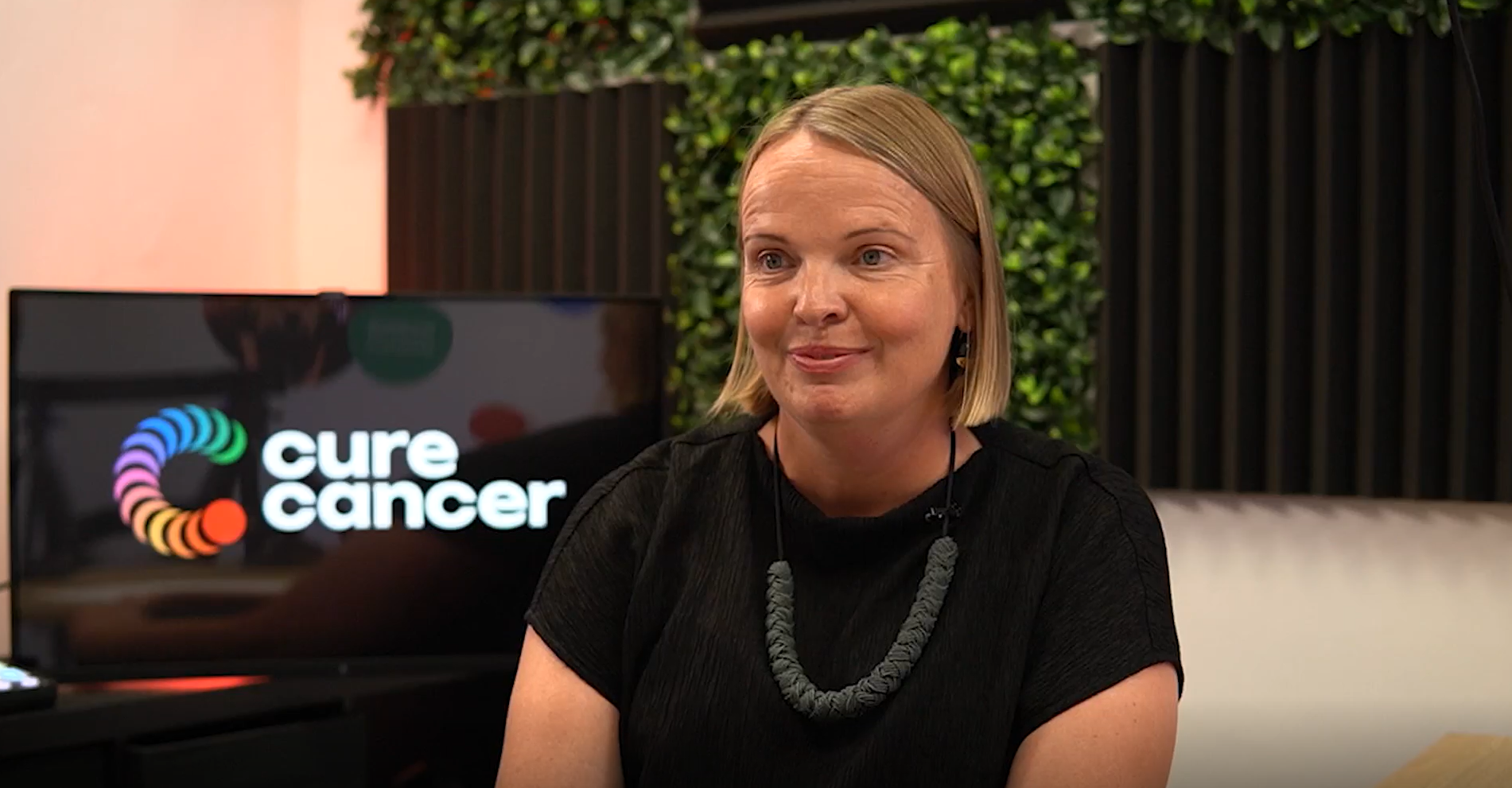
Back in 2011, a phone call changed everything.
Prof Caroline Ford was an emerging researcher at the Lowy Cancer Research Centre at UNSW Sydney, working on a high-risk, high-reward idea: that a particular signalling pathway known as "Wnt" could hold the key to new treatments for ovarian cancer. She was also, by her own account, nearly out of funding entirely.
"It would not be an exaggeration to say that Cure Cancer funding actually changed my career and changed my life," she says. "I was out of funding. I would not have had a job beyond the end of a year as an early career researcher." When the then-CEO of Cure Cancer called her on her birthday in December to tell her she'd been successful, the relief was profound. "It really would have been the end of my career in cancer research if I had not received that funding."
That first grant — the beginning of a long relationship with Cure Cancer — was her first funding in ovarian cancer, the disease that has since defined her career. Today, she leads a team of 12 researchers in the UNSW Gynaecological Cancer Research Group (GCRG), focused on ovarian cancer, endometrial cancer, and endometriosis. "I really attribute a lot of that to that first Cure Cancer funding," she says.
Her team's work is now on the cusp of a major milestone. Over many years, the GCRG has identified three DNA biomarkers capable of detecting all major types of ovarian cancer in a blood sample. The team is now in the final stages of combining them into a single, highly sensitive test, with clinical trials targeted for 2026. It is precisely the breakthrough she dreamed of in 2011, when she described an early detection test as "the holy grail, because there's currently no clear way to detect the disease at an early stage."
In May 2025, Prof Ford added another milestone to her career, being appointed Strategic Director of the newly established Ainsworth Endometriosis Research Institute (AERI) at UNSW. The institute is backed by a $50 million commitment from the Ainsworth family. It is the largest known philanthropic contribution to endometriosis research globally, and brings together researchers from five universities and three hospitals to advance precision medicine for the disease.
Prof Ford has also given back to the next generation in a meaningful way. From 2021 to 2024, she served as Research Chair of Cure Cancer, helping to shape the organisation's grant-making and ensure it continued to back the boldest, most innovative emerging researchers. "I love the opportunity to directly support early career researchers," she says, "and make sure that we're supporting as many different researchers in as many diverse projects and different tumour types with really radical and bold ideas. I love that I'm playing a small part in kick-starting their careers onto hopefully bigger and better things."
For Prof Ford, the driving force behind all of it is simple. "What motivates and inspires me is people," she says. "It's absolutely driven by the people and their families that are affected by the diseases I study."
Dr Jessica Holien: Tackling treatment resistance
Head of Computational Biology, RMIT University

Back in 2020, Cure Cancer supported Dr Jessica Holien through a grant co-funded with Cancer Australia's Priority-driven Cancer Support Scheme. At the time, she was pursuing a bold idea: using computational tools to map the molecular "machinery" driving mucinous ovarian carcinoma (MOC), a rare and poorly treated form of the disease, so that new, targeted drug therapies could be designed from the ground up.
That early backing helped Dr Holien build her lab at RMIT University, where she continues to lead research at the intersection of computational biology and drug discovery. Her work has produced two significant advances in the years since: her team developed a novel bioinformatics approach to identify potential drug targets for MOC by mapping protein interactions in cancer cells, and separately identified KIF18A, a protein essential to cancer cell division but not normal cells, as a promising therapeutic target. Inhibiting KIF18A could disrupt cancer growth without harming healthy tissue.
Dr Holien is also a passionate advocate for diversity in medical research. "In commercial drug discovery, women are still underrepresented," she says. "Our project on MOC has been led by an all-female team. We bring a unique perspective, designing trials that consider gender differences in drug responses, something particularly crucial for diseases like ovarian cancer."
Dr Emily Colvin: Pioneering new treatments
Bill Walsh Translational Cancer Research Laboratory, Kolling Institute, University of Sydney

In 2012, Cure Cancer supported Dr Emily Colvin through a Priority-driven Collaborative Cancer Research Scheme grant co-funded with Cancer Australia. She was a postdoctoral researcher at the time, pursuing a question that wasn't getting much attention: what role do the non-cancer cells surrounding a tumour play in helping it grow and spread?
That question remains at the heart of her work today. Dr Colvin has since demonstrated that cancer-associated fibroblasts (CAFs), a type of support cell found within ovarian tumours, help cancer cells evade the immune system by sending out genetic messengers, known as lncRNAs, packaged inside tiny extracellular vesicles. Understanding how this process works opens the door to blocking it, and potentially stopping cancer from spreading.
She is also working to identify lncRNAs that could serve as biomarkers, biological signals in the body that may help clinicians predict how a patient will respond to treatment, paving the way for more personalised therapies.
"Talking to patients about my research and hearing their experiences is incredibly rewarding," Dr Colvin says. "It puts everything into perspective and reinforces why this work is so important. We need better treatments, and the only way to make progress is through research."
Professor Nikola Bowden: Repurposing old drugs for new ovarian cancer treatments
Professor and Co-Director, Centre for Drug Repurposing and Medicines Research, University of Newcastle and Hunter Medical Research Institute (HMRI)

Professor Nikola Bowden's relationship with Cure Cancer goes back to 2010 and 2013, when early grants funded her groundbreaking research into DNA repair deficiency in melanoma. Those findings were the seed of something much bigger. By proving that DNA repair is deficient in melanoma, she unlocked an entirely new approach to treatment, and that same logic now underpins her ovarian cancer research.
Today, Prof Bowden is the Co-Director of the Centre for Drug Repurposing and Medicines Research at the University of Newcastle and HMRI, and the Vanessa McGuigan HMRI Fellow in Ovarian Cancer Research. She leads the Australian Program for Drug Repurposing for Treatment-Resistant Ovarian Cancer, and in 2025, the program delivered a significant milestone: the Phase II REPURPOSE clinical trial, assessing efavirenz, a repurposed HIV drug, in patients with platinum-resistant ovarian cancer, moved from the lab into clinical reality. Results from the trial were published in the International Journal of Gynecological Cancer in early 2025, co-authored with Prof Caroline Ford's GCRG team. More recently, the team published research showing that ivacaftor, a cystic fibrosis drug, shows strong potential to treat ROR1-expressing high-grade serous ovarian cancer.
Prof Bowden is also a strong advocate for women in STEM. "Women make up more than half the STEM workforce, yet they remain underrepresented in leadership roles," she says. "We need more visibility and recognition so young girls can see that a career in science is possible for them too."
Her personal motivation for this work runs deep. A close friend's ovarian cancer diagnosis prompted her pivot from melanoma to this field, and the McGuigan family, who lost their daughter Vanessa to the disease, have supported her research with a 10-year fellowship.
"The treatment options for ovarian cancer have not advanced at the same rate as most other cancers," she says. "It is a rare disease that affects only women and receives very little funding or research attention. We need to change that so women with ovarian cancer have the same chances of survival as those with more common cancers."
Looking to the future: The importance of funding and support
The work of Dr Jessica Holien, Prof Caroline Ford, Dr Emily Colvin, and Prof Nikola Bowden is vital to transforming ovarian cancer detection and treatment. But progress is only possible with continued funding and community support.
As Prof Ford puts it: "Improvements in cancer can only come from research, and research can only be facilitated through funding. It's absolutely key to enabling the research but also to making sure we have a new pipeline, a new generation of cancer researchers coming through the system, and not leaving due to lack of funding."
This Women's History Month, we celebrate the extraordinary scientists who are changing what is possible for people affected by ovarian cancer and beyond. By investing in brilliant emerging researchers at the very start of their journey, we help set discoveries in motion that can take years or even decades to reach patients. That's exactly what your support makes possible.
To fund the next cancer breakthrough, head to the link below:


