

Groundbreaking melanoma research fuelled by Cure Cancer
By The Cure Cancer Team | 12 January 2026
What if we could save more people from skin cancer? What if we could predict melanoma before it appears?
Each of these Cure Cancer–funded scientists are pursuing an innovative approach to melanoma (and other skin cancers), bringing us closer to a world where the word “melanoma” no longer strikes fear. Their optimism and bold ideas are made possible by your support, and their stories show how donor-funded breakthroughs can save lives.
What if we could beat melanoma by starving it?
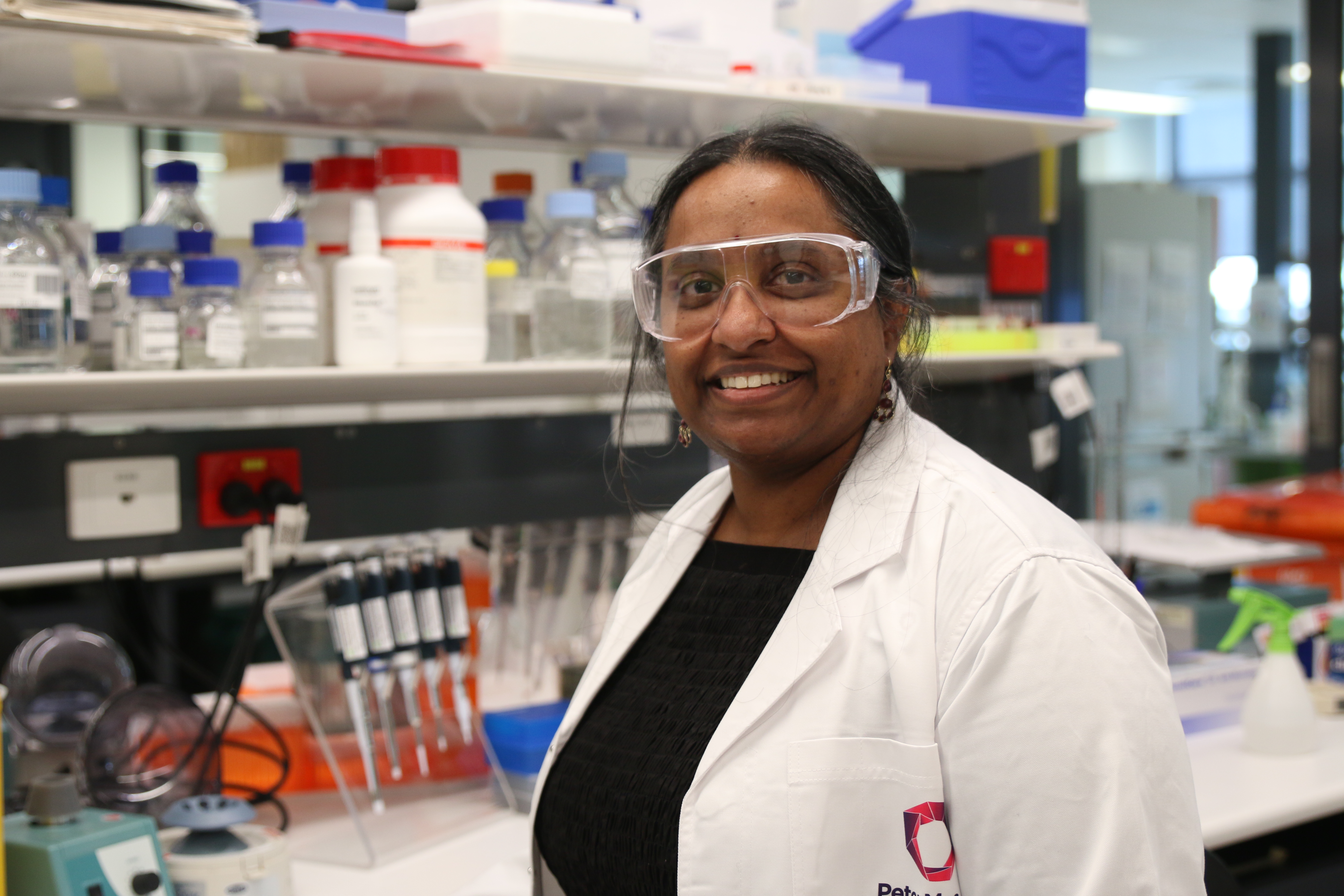
Dr Aparna Rao (University of Melbourne & Peter MacCallum Cancer Centre) is attacking melanoma’s “sweet tooth”, by cutting off the fuel that feeds the deadliest skin cancers. Image: Supplied.
Most cancer research chases gene mutations or immune therapies. Dr Aparna Rao is asking a different question: What does cancer eat, and can we cut off its food supply?
Melanoma has a voracious appetite for sugar. It devours glucose to fuel its deadly spread. Aparna's breakthrough idea: the tumour's biggest strength could become its fatal weakness.
She's running a first-of-its-kind clinical trial, giving melanoma patients a special tagged sugar before surgery, then measuring exactly how much their tumour consumed. By analysing blood and tumour samples, she's mapping the cancer's 'diet', and early results show that sugar-hungry melanomas are the most aggressive and treatment-resistant.
This could change everything. Imagine a simple test that flags high-risk patients before their cancer returns. Or a targeted pill that starves the tumour without the brutal side effects of chemo. Since metabolism is universal to all cells, breakthroughs here could extend beyond melanoma to other cancers.
It's audacious because almost no one else is looking at metabolism while everyone else chases the same paths. And it's urgent: in Australia, one person still dies of melanoma every six hours.
Dr Rao’s metabolism project is exactly the kind of novel research that early funding makes possible. As an early-career researcher, Aparna had a bold vision but needed support to get it off the ground. In fact, Aparna received her Cure Cancer grant at a crucial time when she had developed this novel idea but lacked funding to continue exploring it.
What if a drop of blood could guide melanoma treatment?
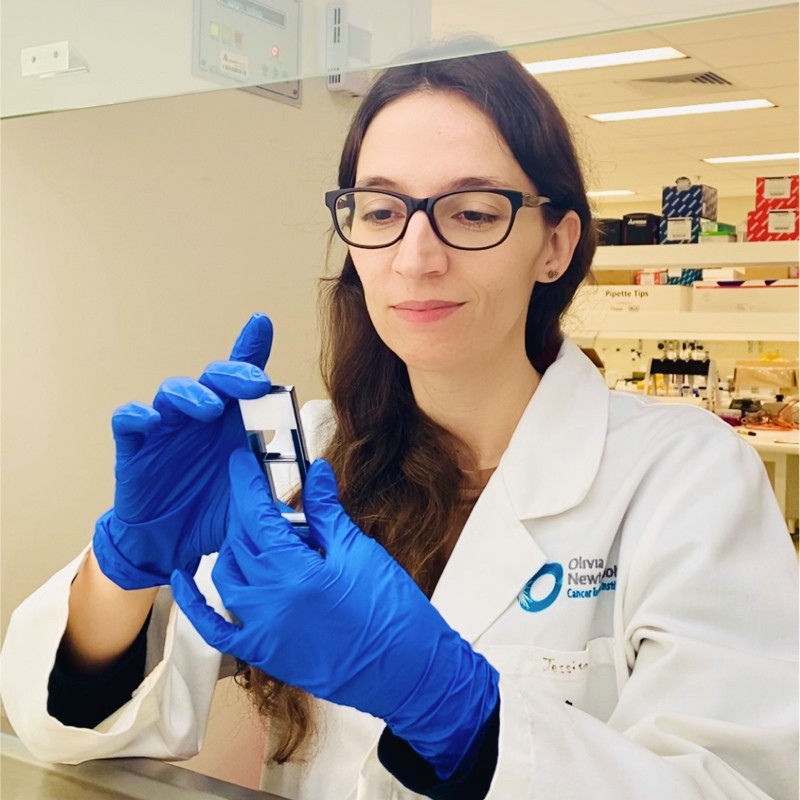
Dr Jessica Duarte (Olivia Newton-John Cancer Research Institute) is turning a simple blood test into a life-saving crystal ball for melanoma therapy. Image: Supplied
Dr Jessica Duarte has developed a non-invasive blood test to take the guesswork out of immunotherapy for skin cancer. With her 2019 Cure Cancer grant, Jessica created a technique to analyse just a drop of a patient’s blood and determine if their immune system is actively fighting the melanoma.
Immunotherapy has been a game-changer for cancer, but it doesn’t work for everyone. About half of patients don’t respond. Until now, there was no easy way to tell in advance who will benefit. Jessica’s bold idea is essentially an “immune system check” via blood that could make immunotherapy reliable for all. By measuring how engaged a patient’s immune system is in attacking the tumour, her test acts like an early alarm bell. Patients whose immune systems aren’t taking down the cancer could be spared wasted time and side effects, moving to other treatments faster. This kind of personalised approach is unexpected in its simplicity: just a drop of blood offering a window into the invisible battle between immune cells and cancer.
What if we could predict melanoma’s next move?

Dr Lauren Aoude (University of Queensland) combines DNA technology and cutting-edge scans to outsmart melanoma before it spreads.
An expert in melanoma genetics, Dr Lauren Aoude has sequenced the DNA of hundreds of melanoma patients over the past decade. With support from Cure Cancer, she’s doing something unprecedented: combining patients’ tumour genetic profiles with their PET/CT scan images to find hidden patterns. In her Cure Cancer-funded project, every melanoma patient’s tumour DNA (from deep genetic sequencing) is paired with detailed scans of their cancer. By overlaying genetic mutations with what the scans show, Lauren aims to discover clues that predict whose melanoma will spread or resist treatment.
In melanoma treatment today, one of the biggest challenges is uncertainty. Two patients might look similar, but one’s cancer could be far more aggressive. Lauren’s forward-thinking approach tackles this by uniting two powerful tools that usually live separate lives: DNA sequencing and medical imaging. This fusion of fields (sometimes called “radiogenomics”) is cutting-edge, and few had considered applying it to melanoma in such a direct way. Lauren believes this could “change the way in which melanoma patients are treated in the future”, making truly personalised medicine possible.
Together, we can make “What If” a reality
Each of these researchers began with a daring question: “What if…?” Thanks to Cure Cancer’s donors, they are able to pursue the answers. And in doing so, they are changing the future of cancer treatment. From Jessica’s blood-test predictor for immunotherapy, to Lauren’s data-driven melanoma maps, to Aparna’s metabolism attack, and Kelly’s crusade against a rare killer, these projects show that bold ideas + funding = hope. They are pioneering solutions that could save lives and spare families the pain of losing loved ones to skin cancer.
The common thread in their stories is your support. These breakthroughs are happening because people like you believed in a world without cancer and invested in these young scientists. Early funding is catalytic. It launches careers and new fields of study, and it accelerates the arrival of cures. In the lab, “what if” can quickly become “we did it!” – but only with sustained resources.
So ask yourself: What if we could make this the last generation to fear cancer? Cure Cancer is committed to that vision, and we invite you to join us. Your donation today will fuel the next Jessica, the next Lauren, or Aparna, who are ready to ask the next big “what if” and push the boundaries even further. It’s not just funding research – it’s funding hope. Together, let’s keep this amazing momentum going. Let’s ensure that brilliant minds have what they need to turn “what if” into “when”.
Donate now to Cure Cancer and help us write the next chapter of this hopeful story. One where we end skin cancer, and all cancers, once and for all.


