

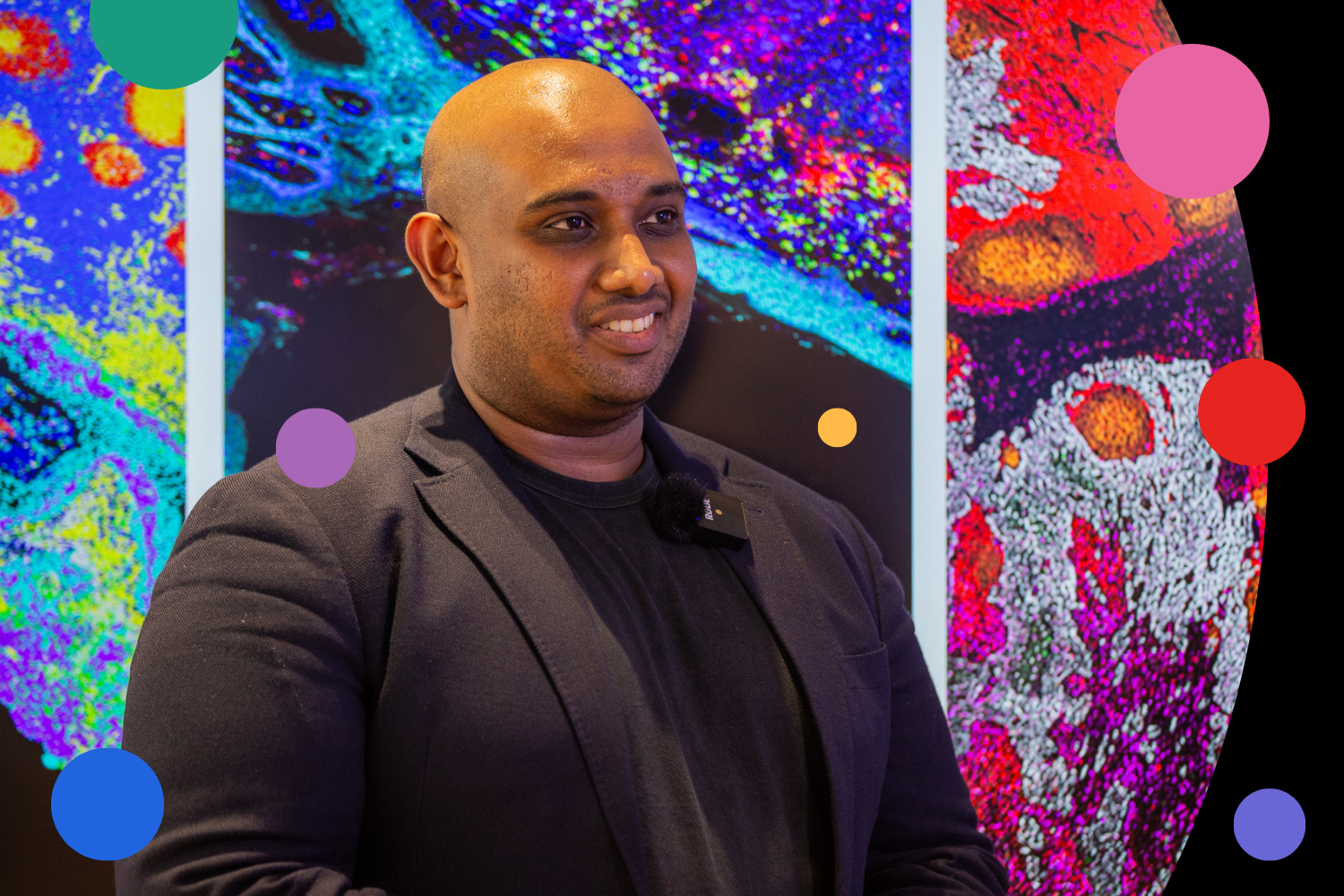
A/Prof Arutha Kulasinghe
Your support in action: how one Cure Cancer grant sparked a trail of world-first discoveries
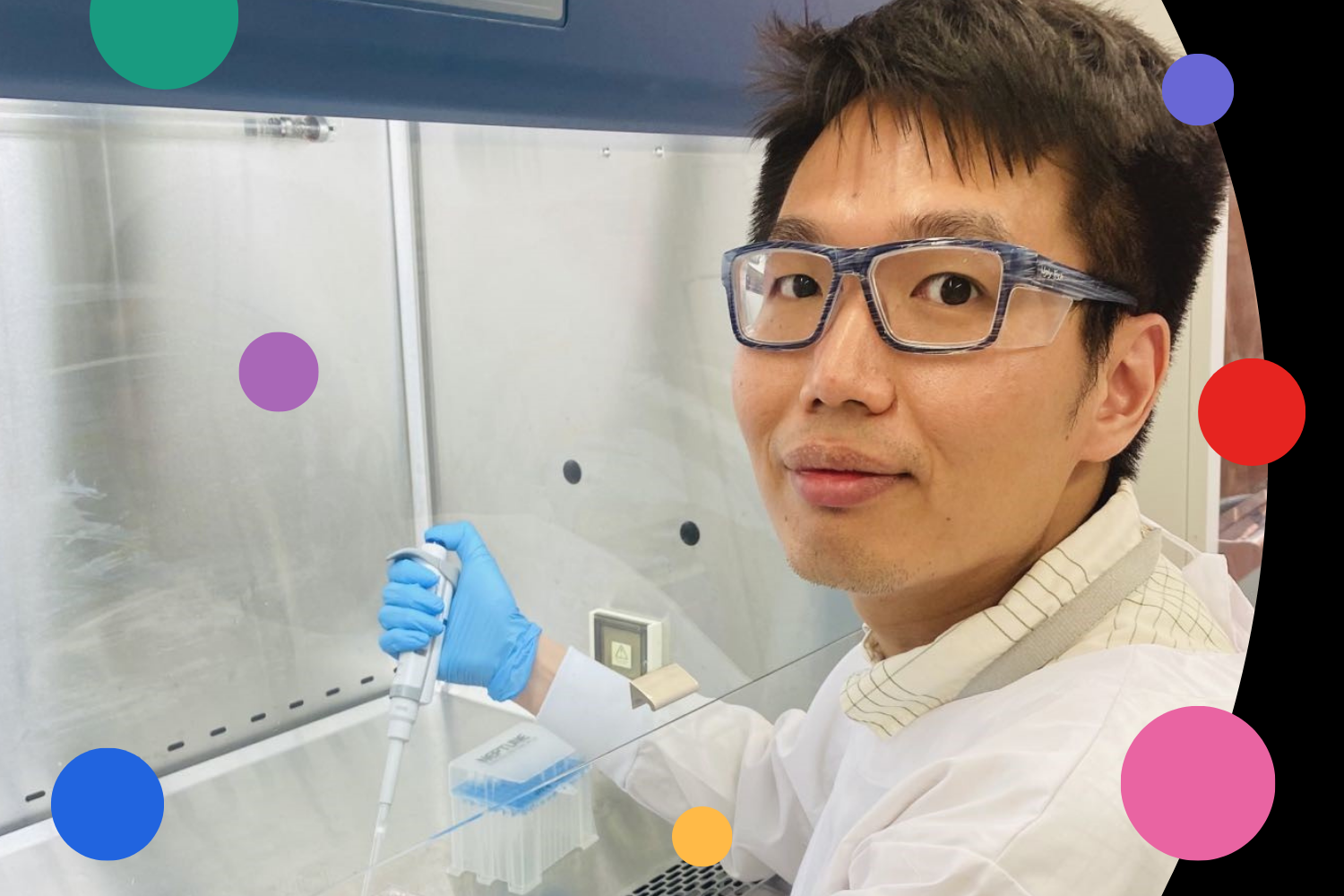
Associate Professor Arutha Kulasinghe is a spatial biology researcher at the University of Queensland's Frazer Institute in Brisbane, Australia. He is the Founding Scientific Director of the Queensland Spatial Biology Centre at the Wesley Research Institute. He received his first Cure Cancer research grant in 2020 and has since published in Nature Genetics, Nature Communications, and the Journal of Translational Medicine. His research develops predictive biomarker tests for lung cancer immunotherapy response. Most recently, he has been appointed the world's first Chair of Spatial Biology at the University of Queensland, a recognition of both his individual contribution and the field he has helped build.
In 2020, Arutha Kulasinghe had a vision most funding bodies were not ready to back. He envisioned building a clinical "Google Maps" for cancer: a way to map every single cell inside a patient's tumour, see how those cells interact with each other, akin to "understanding the personal lives of cancer cells", and use that information to predict whether a patient would respond to immunotherapy or not.
It was bold. It was unproven. And it was exactly the kind of idea Cure Cancer exists to fund.
This is what your support has made possible since then.
The grant that started it all
Arutha's path into cancer research began long before 2020. It began at 2am in an operating theatre in Colombo, Sri Lanka, where he watched surgeons remove a football-sized tumour from his grandfather.
"I was also involved with his care after the operation and until he died," Arutha shares. "This experience motivated me to pursue a career in translational cancer research, with the goal of developing early detection and screening assays that could improve survival rates and quality of life."
When Cure Cancer backed him in 2020, Arutha was based at Queensland University of Technology, focused on immunotherapy research for head and neck cancers. The funding gave him the runway to pursue research questions he could not yet take to larger, more conservative funding bodies. It also brought him into a community that would change the course of his career.
A pivot, a partnership
Shortly after receiving his grant, COVID-19 arrived. Rather than stall, Arutha pivoted: he applied the same spatial cell-mapping technology he had been developing for cancer to COVID-19 patients' lung tissue. By comparing it against pandemic H1N1 samples, his team identified immune-related gene signatures that could help differentiate COVID-19 from other respiratory infections and assess disease severity. The work was published in the Lancet Microbe, EMBO Molecular Medicine and Ebiomedicine and recognised with two AusBiotech awards: a COVID-19 Life Science Sector Collaboration Award and an Industry's Choice Award.
Around the same time, Arutha attended a Cure Cancer Researcher Symposium, where he met a fellow Cure Cancer grantee, Dr Fernando Guimaraes. It was a fateful introduction: the two were both based at the University of Queensland, yet had never crossed paths until that room. The collaboration that followed became one of the most important of Arutha's career. Fernando (now A/Prof Guimaraes), has since become A/Prof Kulasinghe's close research colleague and is now Cure Cancer's Research Chair. The community Cure Cancer builds does not end when a grant does.

From COVID to a World-First
The COVID research unlocked something unexpected. It proved that Arutha's spatial mapping technology could work on tissues more than a century old. That realisation seeded a world-first project: working alongside Prof John Fraser and Prof Kirsty Short from the Critical Care Research Group and The University of Queensland, Arutha's team began analysing lung tissue samples collected during the 1918 Spanish flu pandemic, using spatial omics technology to examine, at a molecular level, how different flu impacted adults and children. The goal was not just pandemic preparedness. The cancer insights it was generating were becoming increasingly significant in their own right.
The research continues to gain recognition

Their Excellencies General the Honourable David Hurley AC DSC (Retd) Governor-General of the Commonwealth of Australia and Mrs Linda Hurley with Cure Cancer Researcher of the Year winner A/Prof Arutha Kulasinghe in 2023
By 2023, the momentum Arutha had built was being recognised across the field. He was named Cure Cancer's Researcher of the Year, and his work appeared in prestigious journals including the European Respiratory Journal, GEN Biotechnology and the Journal for Immunotherapy of Cancer (JITC). His ambitions for where this research could go were becoming clearer, and more urgent:
"A leap of faith, and of the imagination, is required to kick-start new ideas. Incremental gains are unlikely to lead to curing cancer. Breakthroughs in technologies allow us to think of 'exciting, new ideas and develop applications' which traditionally don't get funded as they're considered 'high-risk'. It takes an Early-Career Researcher to do this. Funding from Cure Cancer has made digitalising tumours possible, a global game changer, which the whole oncology and pathology community is behind."
Publishing across cancers
The research has not stayed in one lane. Over 2024 and 2025, Arutha and his team published across lung, head and neck, skin, and ovarian cancers, with studies appearing in the Journal of Translational Medicine, iScience, and Genome Medicine, among others. Each study maps another piece of the tumour microenvironment, building towards the kind of comprehensive cellular atlases that could one day help clinicians tailor treatment to every individual patient. More recently he’s partnered with industry to use the power of AI to help develop and scale the atlas building.
Cure Cancer has continued to back this work alongside other funding bodies, including the NHMRC MRFF, and philanthropy, a reflection of what early investment in an emerging researcher can catalyse.
In 2025, Arutha received the NHMRC Science to Art Award for "Battleground Beneath the Skin," a striking digital image of a head and neck cancer tumour captured using spatial proteomics at single-cell resolution. Similar imagery was later wrapped on custom Xbox consoles and auctioned to raise funds for cancer research, reaching more than 170 million people worldwide. It is a reminder of what happens when science is communicated boldly: research that might have lived only in journals found a global audience.
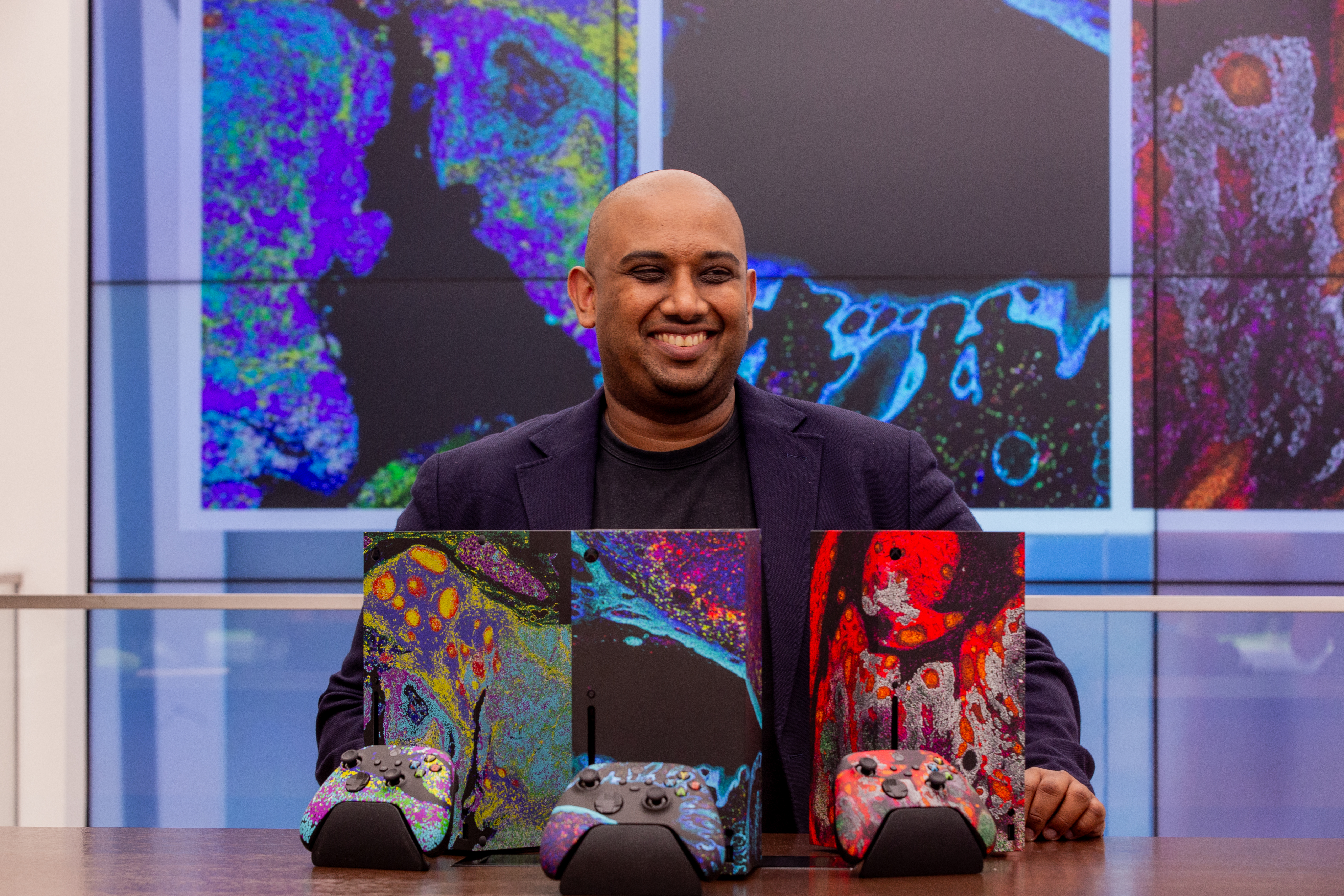
Xbox ANZ and Cure Cancer, partnered with A/Prof Arutha Kulasinghe from The University of Queensland, unveiled three custom Xbox Series X consoles inspired by A/Prof Kulasinghe’s award-winning cancer research.
One step closer to knowing which patients immunotherapy can help
In February 2026, a major study from Arutha's lab was published in Nature Communications, one of the world's most prestigious scientific journals. The research examined how lung cancer cells' metabolic behaviour predicts whether a patient will respond to immunotherapy. Using machine learning and computational analysis, the team mapped how cells in non-small cell lung carcinoma interact with each other and metabolise glucose, and found that specific metabolic patterns within the tumour predicted treatment response or resistance.
The need for this research is urgent. Lung cancers kill more Australian’s than any other cancer type. Immunotherapy offers real hope, but it benefits only around 15 to 30 per cent of patients, while costing up to $350,000 per patient per year. Knowing in advance who will respond, and who needs a different approach, could transform both patient outcomes and the burden on the healthcare system.
The next phase is to incorporate this approach into clinical trials, with plans to extend the methodology to head and neck cancer and aggressive skin cancers. The research was conducted in collaboration with Yale School of Medicine, Wesley Research Institute, and Nucleai.
Why your support matters
In just a few years, support from Cure Cancer donors helped an emerging researcher build a world-leading lab, pioneer spatial biology across the Asia-Pacific, publish in some of the world's most respected scientific journals, and bring cancer research that was once theoretical to the doorstep of clinical application.
"The support from Cure Cancer has been transformative. Spatial biology is a field moving at extraordinary speed and having the funding to build a team, develop the infrastructure, and pursue bold ideas has meant we are not watching this revolution from the sidelines. We are helping to shape it. Ultimately, that means shaping the future of precision medicine from how cancers are diagnosed, how treatments are chosen, and how we give patients the best possible chance."
The future Arutha describes, where precision medicine approaches result in better patient outcomes and, ultimately, cures, is being built one bold idea at a time.
Your donation backs the next bold idea, before the world knows it matters.
Fund a brilliant researcher. Back a bold idea. Be the spark that turns "What if?" into "We did it."
Let's stay in touch
To receive updates on our work, campaigns and our impact in cancer research, subscribe to our newsletter.


