
Childhood leukaemia researcher named Cure Cancer's 2026 Researcher of the Year
Associate Professor Laurence Cheung recognised for research shaped with families, as Professor Roger Reddel AO receives the Life Member Award after more than three decades of service
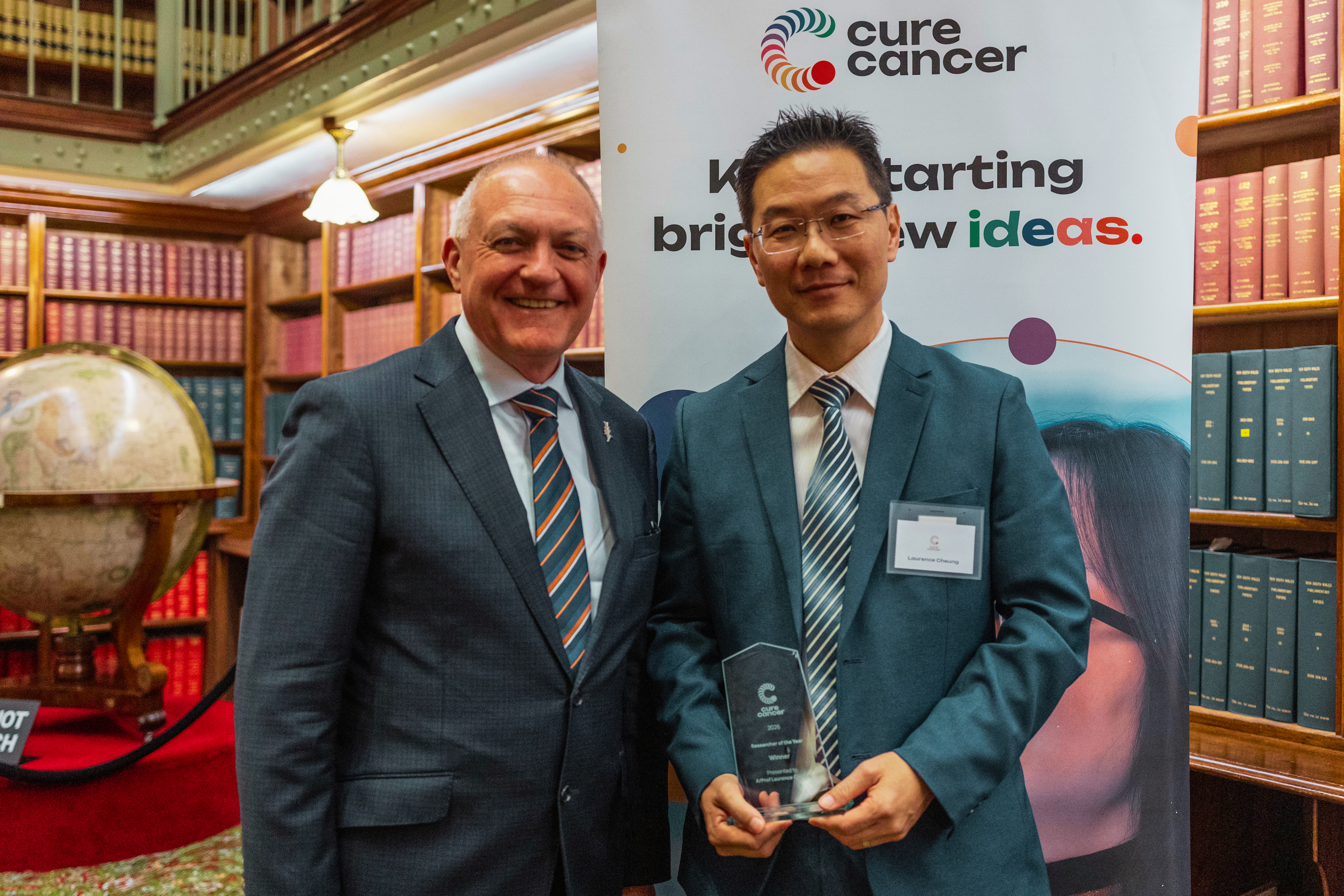
The Honourable David Harris MP with Researcher of the Year 2026 A/Prof Laurence Cheung
Childhood leukaemia researcher Associate Professor Laurence Cheung has been named Cure Cancer's 2026 Researcher of the Year, recognising the research impact made possible by early philanthropic support and his commitment to involving families in the research process.
The award was presented at NSW Parliament House on Monday, 20 July, at an event hosted by the Hon David Harris MP, NSW Minister for Medical Research. Cure Cancer also conferred the Life Member Award on Professor Roger Reddel AO, recognising a relationship spanning more than three decades as a grant recipient, research adviser, and Board member.
Together, the two honours show how early philanthropic support can help promising ideas grow into sustained research programs, attract further investment, and strengthen Australia's cancer research community.
Cure Cancer Researcher of the Year 2026: Associate Professor Laurence Cheung
Associate Professor Cheung is an Associate Professor at Curtin University and Co-Head of Leukaemia Translational Research at The Kids Research Institute Australia in Perth. His work focuses on improving treatment for children with high-risk leukaemia by understanding how the bone marrow environment can help cancer cells survive and resist treatment.
His grant investigated the bone marrow microenvironment in children with high-risk leukaemia.
Research from the project was published in HemaSphere in April 2026. The study found that blocking sclerostin, a protein involved in bone regulation, protected bone from damage caused by B-cell acute lymphoblastic leukaemia in preclinical models, pointing to a possible new approach for reducing bone damage associated with the disease.
Since receiving the grant, Associate Professor Cheung has published more than 26 peer-reviewed papers, secured more than $6 million in competitive research funding as Chief Investigator, and contributed as an investigator to collaborative grants worth more than $137 million.
For more than six years, he has collaborated with consumer representatives, including parents of children diagnosed with acute lymphoblastic leukaemia, so that patient and family perspectives directly shape his research priorities and outcomes.
“Laurence has used early philanthropic support exactly as it is intended: to build evidence, attract further investment, and keep children and families at the centre of the research," says Vanessa Barry, CEO of Cure Cancer. "His progress shows how backing an emerging researcher can create impact far beyond the original grant, and we are proud to recognise him as our 2026 Researcher of the Year.”
“As a researcher and father of three, I’m determined to help improve the lives of children diagnosed with cancer. This award shines a spotlight on the importance of childhood cancer research in Western Australia, helps build new collaborations and support, and accelerates our efforts to develop better treatments for children facing leukaemia.”
– Associate Professor Laurence Cheung
Cure Cancer Life Member: Professor Roger Reddel AO
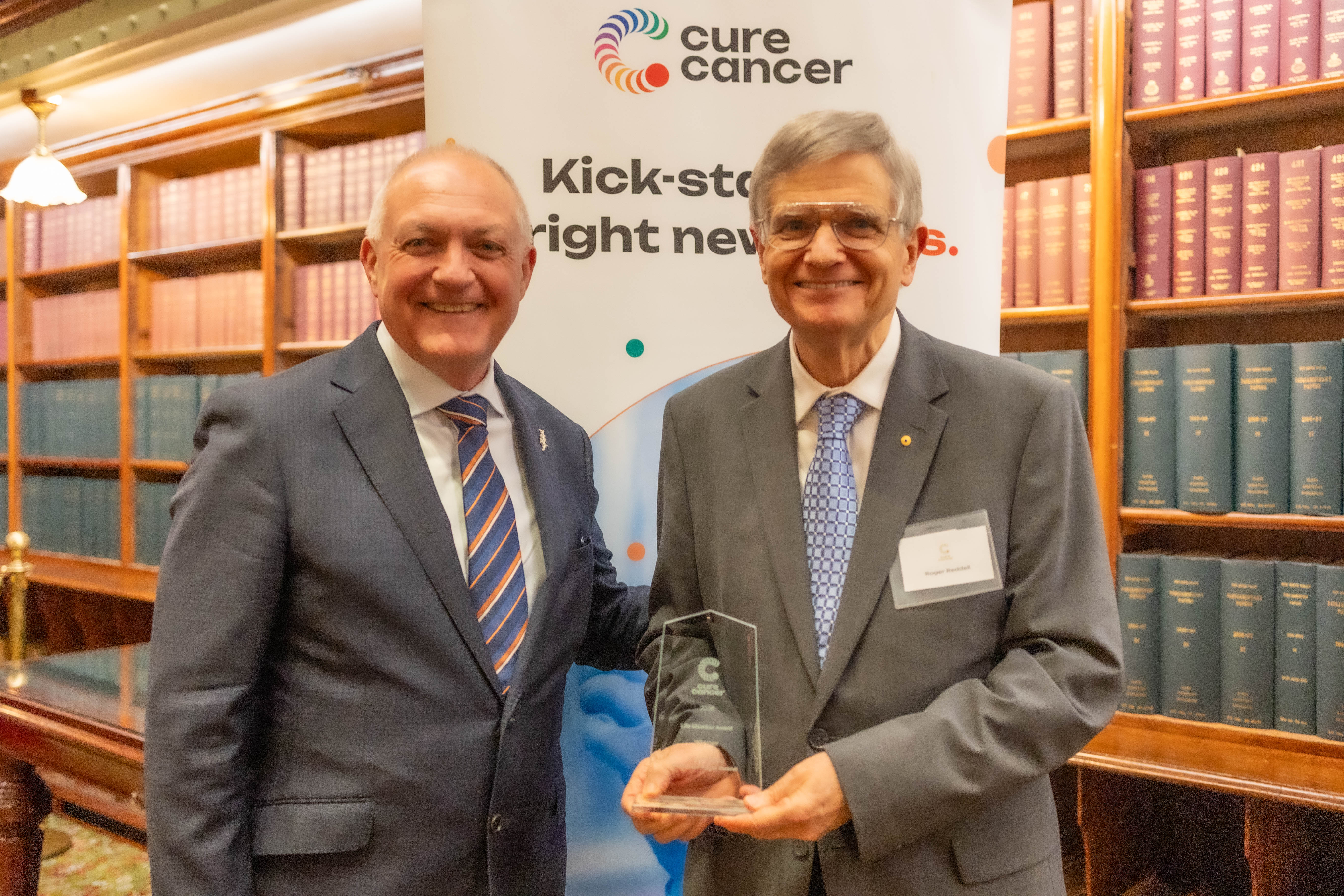
The Honourable David Harris MP with Prof Roger Reddel, Cure Cancer Life Member
Professor Roger Reddel AO, Director of the Children's Medical Research Institute (CMRI) and Head of its Cancer Research Unit in Sydney, has been named Cure Cancer's newest Life Member, recognising a relationship with the organisation spanning more than three decades.
In 1992, Professor Reddel received a Cure Cancer grant to investigate how cancer cells become immortal, at a time when the scientific community regarded the work as a fringe idea. That early support helped establish research that would make major contributions to the understanding of cancer cell immortalisation. He has led the Cancer Research Unit at CMRI for more than 30 years, building an internationally respected program from an early philanthropically funded project.
Professor Reddel's career has been recognised with some of Australia's highest scientific honours, including election as a Fellow of the Australian Academy of Science and the Australian Academy of Health and Medical Sciences, the Ramaciotti Medal, the Neil Hamilton Fairley Medal, and appointment as an Officer of the Order of Australia in 2021.
Six years after receiving his grant, Professor Reddel joined Cure Cancer's Medical Grants Advisory Committee and later its Research Committee. He served in those roles for 26 years, including 11 years on the Board of Directors, helping assess and support generations of cancer researchers.
Vanessa Barry says, "Roger’s story shows the long-term value of backing bold ideas early. His work has made major contributions to our understanding of how cancer cells become immortal, and his decades of service have helped strengthen the pathway for researchers who followed. His Life Membership recognises both an extraordinary research career and an enduring commitment to the Cure Cancer community.”
"My connection with Cure Cancer goes back to 1992 when I received a research grant early in my career. Six years later I joined the Medical Grants Advisory Committee and subsequently the Research Committee and remained in those roles continuously for 26 years. For 11 of those years, I was also a member of the Board of Directors.
I strongly believe in Cure Cancer's mission to support young cancer researchers, so it's a real honour to be made a Life Member. But the greatest reward has been seeing so many of the young researchers the organisation has supported over the years make great progress towards curing cancer."
– Professor Roger Reddel AO
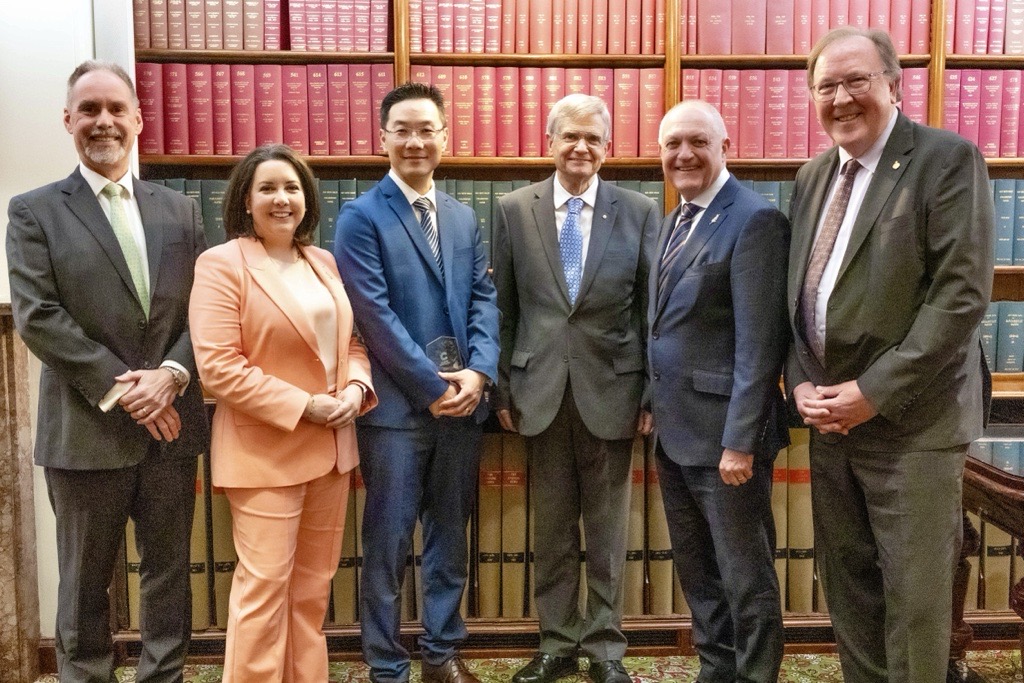
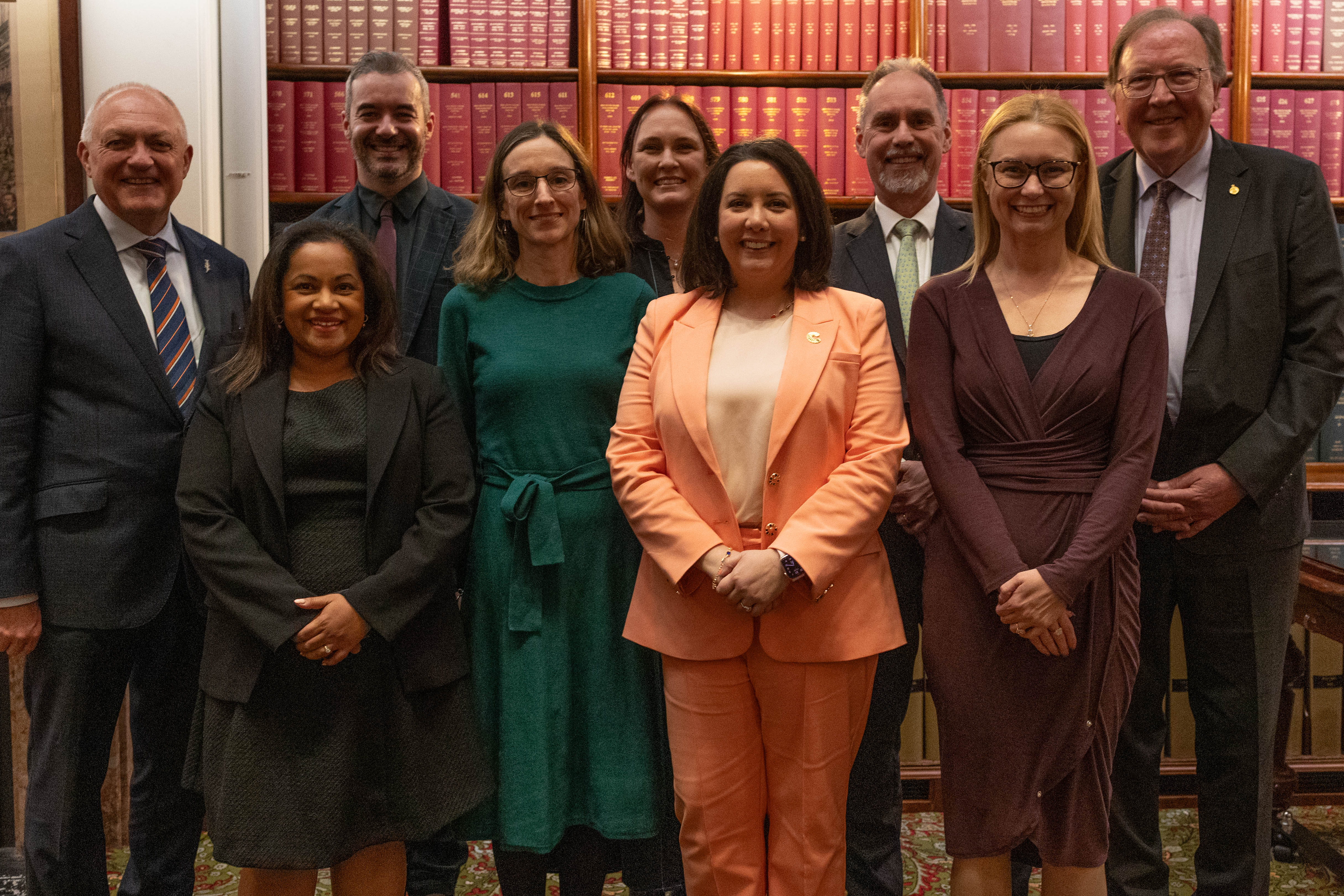
The Hon. David Harris MP, A/Prof Fernando Guimaraes, Kate Guest, Paul Umbrazunas, Dr Michael Holland MP, Aditi McManus, A/Prof Liz Caldon, Vanessa Barry, Stacey Kavanagh.
Since 1967, Cure Cancer has funded more than 570 research projects across every cancer type. The organisation supports emerging researchers when new ideas can struggle to attract funding, helping them generate the evidence needed to take the next step.